
If you're an ESL (English as a Second Language) lawyer or legal professional working internationally—or preparing to—it's important to understand that legal systems vary not only in rules and structures but also in language, communication style, and courtroom practice. These differences can be confusing, even for experienced lawyers. But understanding them will help you work more effectively across borders and with international colleagues or clients.
This article compares legal systems, focusing on how language and practice differ in common law and civil law countries, and how these differences affect lawyers—especially non-native English speakers.
1. Common Law vs. Civil Law: The Two Major Traditions
Globally, most countries follow either the common law system or the civil law system. Some countries use a mix of both, but these are the two most dominant systems.
Common Law
Common law is based on judicial decisions (what judges have decided in past cases), known as precedents. This means that court decisions in previous cases help determine the outcome of current cases. Common law is used in countries like:
- United States
- United Kingdom
- Canada
- Australia
- India (mixed with statutory law)
In common law systems, court opinions and case law are extremely important. Lawyers often spend time analyzing past rulings to argue their cases.
Civil Law
Civil law is based mainly on written codes and laws passed by legislatures (governments). Judges interpret and apply these codes rather than relying on past cases. Civil law is used in countries like:
- France
- Germany
- Spain
- Japan
- Many Latin American countries
In civil law systems, legal education and writing tend to be more academic and rule-based, rather than based on persuasive argument and precedent.
Tip for ESL lawyers: If you’re transitioning from civil law to a common law system, pay close attention to legal reasoning and persuasive writing. You'll be expected to argue why a certain case applies—or doesn't apply—to the current situation.
2. Legal Language: Formality, Structure, and Vocabulary
Legal English is often difficult for non-native speakers. It includes technical terms, old-fashioned language (like "herein" or "thereof"), and complex sentence structure. But language use also varies depending on the legal system.
Formality and Tone
In the U.S. and U.K., legal documents and court proceedings are formal, but modern legal English is moving toward plain language. This means writing that is clear, direct, and avoids unnecessary jargon.
In contrast, in some civil law countries, legal writing can be even more formal, using complex and academic phrases. This can make translating or adapting documents between systems quite difficult.
Legal Vocabulary
Legal English uses many Latin phrases (e.g., habeas corpus, prima facie, mens rea), especially in common law. In civil law countries, legal terms are often rooted in local languages, based on Roman or Napoleonic codes.
If you are an ESL lawyer, it’s important to master legal vocabulary in both general English and legal-specific contexts.

3. Legal Education and Training
Another big difference lies in how lawyers are trained.
In Common Law Countries:
- Law is often studied as a graduate degree (e.g., Juris Doctor in the U.S.)
- Law school focuses on case law, legal writing, and oral advocacy (speaking and arguing).
- Law students learn by reading cases and discussing them (the Socratic method is common in U.S. law schools).
In Civil Law Countries:
- Law is usually studied as an undergraduate degree.
- The focus is on learning the codes and rules.
- Oral advocacy is less emphasized in some jurisdictions.
These differences affect how lawyers communicate and write. Common law lawyers often develop persuasive communication skills, while civil law lawyers may focus more on precision and structure.
Criminal Law Lexicon
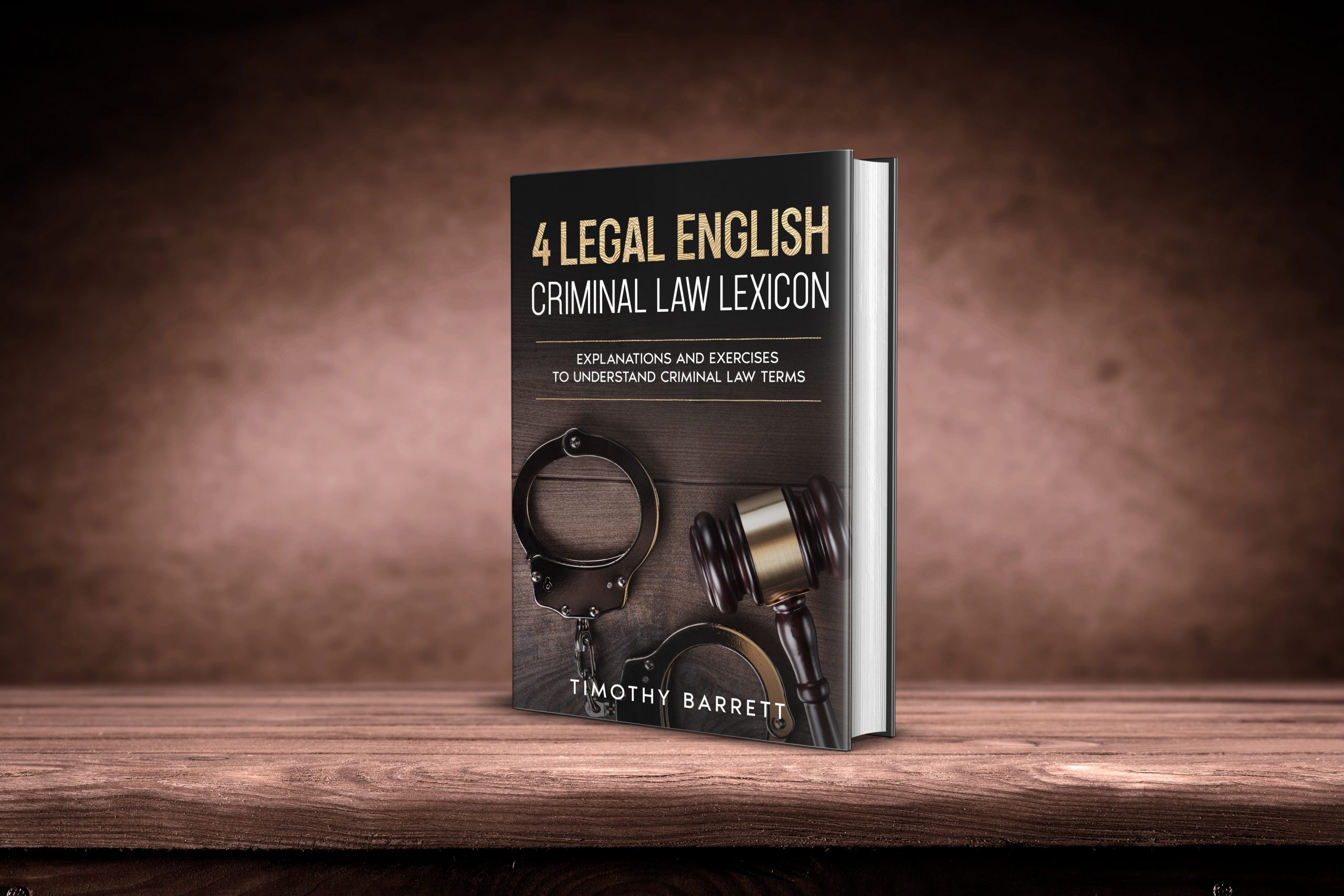
Announcing a brand new book for sale!
Criminal Law Lexicon is a great way to learn important criminal law vocabulary and phrases. There are over 550 exercises for you to both test your comprehension and improve your knowledge. After you complete the book, you can take an online exam to make sure you understand the material covered in the book.
ONLINE CONTENT! If you have trouble with a question, comment on the book’s page on the 4 Legal English website. This online forum is a great way to discuss any questions you might have. After completing the book, take an online exam to make sure you understand the material covered.
This book is designed for non-native English speakers who want to improve their understanding of the proper Legal English terms concerning the field of Criminal Law. This book introduces this lexicon and gives examples of using these words.
If you are law student, lawyer, judge, police officer, legal translator, or other legal professional, then this book can help you. If you are seeking to complete a master’s of law (LLM) in the United States, or in the English Language anywhere else in the world, then this book can help you.
Each chapter contains explanations of key terms that are frequently used by professionals in criminal law – these are the lexicon words. Then there are exercises to test and reinforce your understanding of these terms. Additionally, you are able to see how these lexicon words are used in context.
You can purchase the book at Amazon. It is available both as a paperback and eBook.
4. Legal Writing Styles
Common Law Writing
In common law systems, writing is often persuasive. Lawyers must argue why a court should rule in their client's favor. For example, a brief in the U.S. is a written argument submitted to the court, filled with analysis, citations to previous cases, and persuasive reasoning.
Civil Law Writing
In civil law systems, writing tends to be expository—focused on explaining the law, not arguing it. Legal memos and opinions may read more like academic essays than persuasive documents.
For ESL lawyers, this means you may need to shift your style when working in a different legal system. You might need to:
- Learn how to make arguments rather than simply describe rules.
- Use active voice and direct statements.
- Practice writing short, clear sentences.
5. Courtroom Practice and Advocacy
Courtroom procedures also differ greatly between legal systems.
Common Law Advocacy
In common law systems, lawyers play a large role in trials. They present evidence, question witnesses, and make opening and closing arguments. Judges serve more as referees.
Oral advocacy is a central skill. Lawyers must speak clearly, respond quickly, and persuade the judge or jury.
Civil Law Procedure
In civil law systems, the judge plays a more active role. They question witnesses, gather facts, and apply the law. Lawyers submit written materials, but they may speak less in court than in common law systems.
Tip for ESL lawyers: If you're entering a common law courtroom, work on your spoken legal English. Practice with mock trials, legal debates, or speaking clubs to build confidence.

6. Client Expectations and Communication Style
How lawyers communicate with clients can also vary.
- In the U.S., clients expect fast, regular updates and plain language explanations.
- In some countries, formality is expected in lawyer–client communication.
- American and British lawyers are often encouraged to be client-centered—focusing on what the client wants to achieve.
This affects both how you write and how you speak. For example:
- A client in the U.S. may prefer: “Here’s your next step.”
- A client in France might expect: “According to Article 128 of the Civil Code…”
If you’re working with international clients, adapt your tone and detail to fit their expectations.
7. Working Across Legal Cultures
Many modern law firms and businesses are international. Lawyers often work across multiple systems and jurisdictions. If you're in this situation, consider the following:
Understand the Basics of Each System
Even if you’re not licensed in both, knowing how the systems differ can improve your communication with colleagues and clients.
Ask Clarifying Questions
Don’t assume the meaning of a term. For example, “solicitor” and “attorney” can mean different things in different countries. Clarify what the speaker or writer means.
Focus on Clear Communication
Use simple, precise English, especially when working across cultures. Avoid idioms or slang unless you know the other person understands them.

Conclusion
Understanding the differences between legal systems is not just about laws—it’s also about language, writing style, courtroom behavior, and client interaction. If you're an ESL lawyer or legal professional working internationally, learning how different legal systems work—and how they communicate—is a powerful advantage.
By adapting your writing and speaking, learning key legal vocabulary, and respecting cultural differences, you can build stronger legal skills and better serve your clients or firm.
Lexicon
| Term | Definition |
|---|---|
| Common law | A legal system based on court decisions and past cases (precedent). |
| Civil law | A legal system based on written laws or codes passed by the government. |
| Precedent | A past legal decision used to decide future similar cases. |
| Case law | The law as established by past court decisions. |
| Code (legal code) | A collection of laws organized by topic, used in civil law systems. |
| Legal brief | A written document submitted to the court that argues a legal position. |
| Socratic method | A teaching style where students are asked questions to stimulate thinking. |
| Oral advocacy | The skill of speaking effectively in court to persuade a judge or jury. |
| Expository writing | Writing that explains or describes something rather than persuading. |
| Persuasive writing | Writing that tries to convince the reader of a point of view. |
| Jargon | Special words or phrases used by a specific profession. |
| Client-centered | A practice where the lawyer focuses on the client’s goals and needs. |
| Latin phrases | Words from Latin commonly used in legal English (e.g., habeas corpus). |
| Mock trial | A practice courtroom session to prepare for real trials. |
| Jurisdiction | The authority of a court or legal system to apply laws in a certain area. |

